
Note: Two WPSD alumni shared their experiences of enrolling at and eventually leaving WPSD. They spoke about how their school district attempted to prevent a hard-of-hearing student from enrolling WPSD, which ultimately led her family to leave the district entirely.
Grace Laird still remembers the betrayal her family experienced at the hands of the school system 51 years ago. She has shared her story with me several times and, each time, I am struck by how unjustly the system treated parents whose only wish was to choose the best educational path for their children.
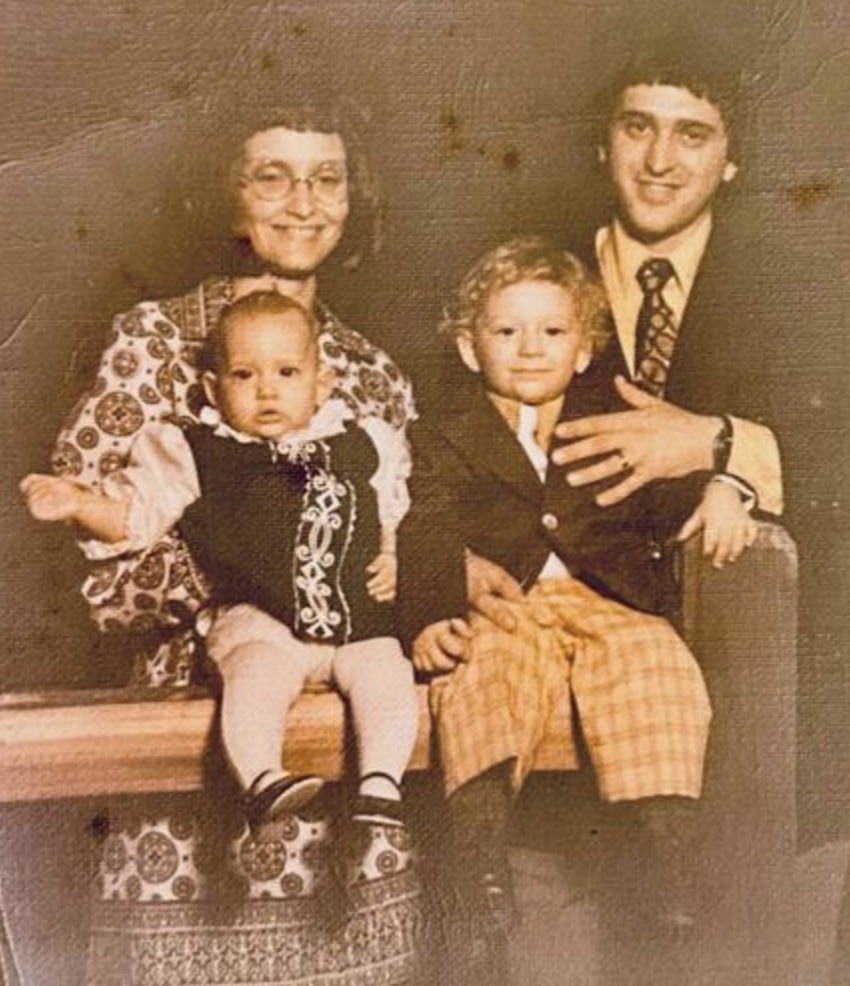
The Laird family was entirely Deaf. Grace’s parents, Darlene and Grant, had agreed to enroll their children in the Western Pennsylvania School for the Deaf in Pittsburgh, where Darlene had graduated in 1967. Their son, Grant Jr., who was 4, was already attending WPSD. After the couple divorced in 1974, Darlene moved with the children to Pitcairn and enrolled Grace, then 3, at WPSD as well. Grant, who remained in Monroeville, was a devoted father and remained actively involved in their children’s lives.
As I have written previously, deaf students benefit from attending Deaf schools. These schools offer more than just education. In this nurturing, family-like environment, students thrive by building lifelong friendships with peers who share their native language (American Sign Language) and by receiving academic support that public schools, even with services for disabled students, cannot match.
This is why Grace’s family enrolled their children in WPSD — they wanted them to have positive experiences and the opportunity to thrive. While a 1975 federal law granted children with disabilities access to free public education, prompting many families to choose nearby public schools, the Laird family remained committed to keeping their children at WPSD.

Grace and Grant Jr. attended WPSD until 1977, when the Local Education Agency discovered Grace had some hearing and tried to persuade their parents that she should attend a nearby public elementary school right next to WPSD. The parents resisted, but the LEA proposed a compromise: allow Grace to attend the public school for one year. Reluctantly, they agreed. After nearly a year, the agency induced Darlene to sign papers she did not fully understand. Shortly afterward, when her parents decided that returning to WPSD was truly in Grace’s best interest, LEA refused, citing the signed paperwork. Grace was required to stay in the public school. Grant Jr., who was profoundly deaf, remained at WPSD.
Grace’s father promptly went to court, asking that Grace be returned to WPSD, where he believed she would be best supported in a positive environment rich in ASL and Deaf culture. Sadly, the court sided with the LEA and the Lairds lost. Grace recalled that among the letters her father had written during the hearing, he penned one expressing his deep disappointment that the LEA ignored their wishes.
Grace never returned to WPSD. She wished she had been allowed to stay there, following in the footsteps of her mother and other family members who had graduated from there. Instead, she remained in the mainstream public school system until her high school graduation.
Grace wasn’t alone in the public school; a few other deaf students had also been placed there. Most teachers and hearing students didn’t know ASL, so interpreters were provided in their classes, but the deaf students still struggled to follow group conversations. A handful of teachers who did know ASL taught specialized classes for deaf students, which helped somewhat. Grace’s dad often visited the school to check on her academic progress, and she also attended speech therapy sessions three times a week, which she disliked.
Grace made some friends among her hearing classmates, but their limited knowledge of ASL meant she and her deaf peers were sometimes excluded. She drifted apart from her hearing friends after graduation, and did not attend class reunions. In contrast, she kept in touch with her deaf friends, with one joining her at Gallaudet University.
It was at Gallaudet that Grace truly flourished — both socially and academically. Surrounded by ASL-fluent teachers and peers, she found a sense of belonging. Today, she proudly holds a Gallaudet degree and cherishes memories that include attending the university’s 25th anniversary celebration.
The LEA’s decision to place Grace in public school — overriding her parents’ wishes and denying them the right to choose the best educational setting for their deaf child — highlights the challenges they faced. Their fight, and Grace’s journey, remind us that true access isn’t about hearing level, but about belonging, language, and respect.
To families deciding between a Deaf school and mainstream public school: trust yourselves, not the so-called experts, and assert your right to choose a Deaf school. It can offer your child the life-changing support and community they truly need.
Adonia K. Smith is a Cedartown native who resides in Cave Spring. She owns ASL Rose, a company that serves the heart of Deaf education, and is active in the Georgia School for the Deaf Alumni Association. Email her at adoniakarrensmith@gmail.com.
Source: Rome News-Tribune